Back to Blog
Cleaning SuppliesPublished updated

The Top 5 Must-Have Cleaning Products for a Spotless Home

Five products cover almost every surface in a home. Here is what each one is for, what to look for on the label, and what you can stop buying.

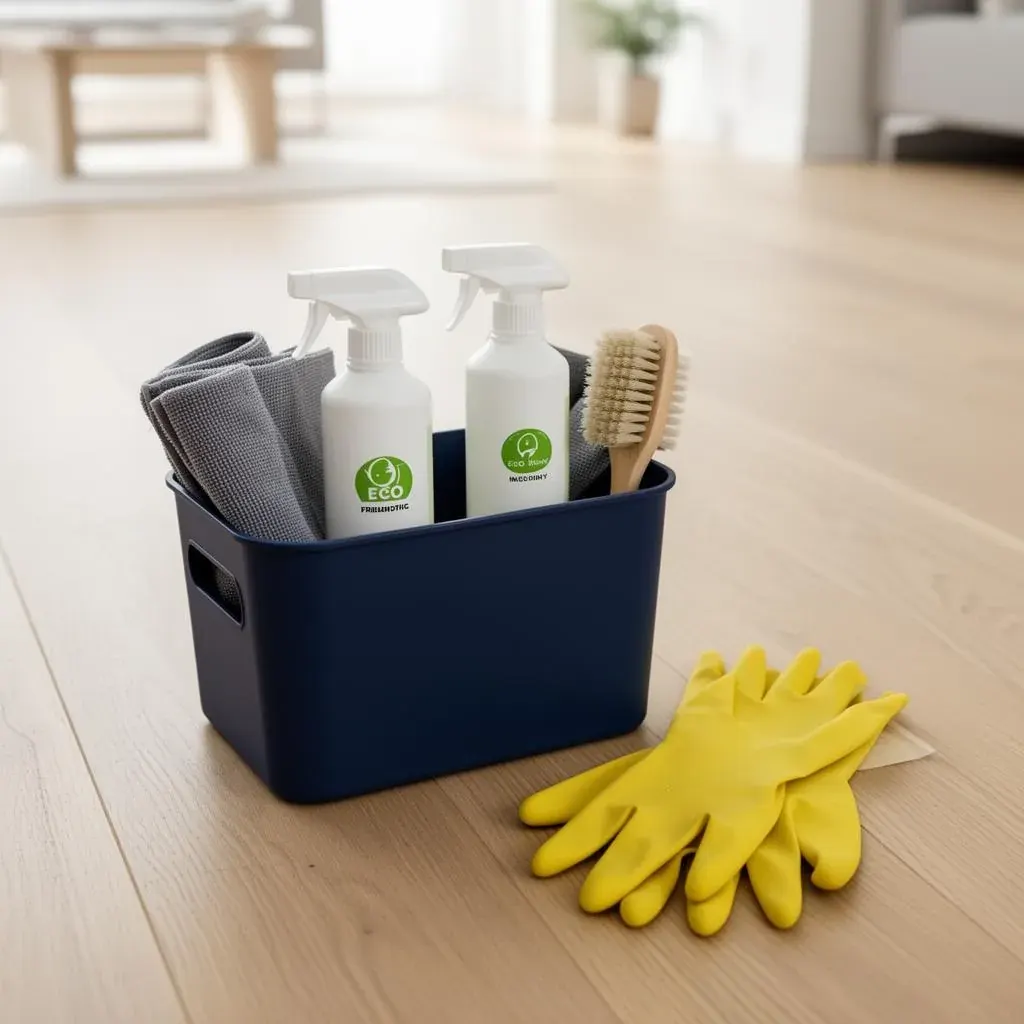
A small set of cleaning products and microfibre cloths arranged on a clean kitchen counter

Open the cupboard under a kitchen sink and there are usually more bottles than jobs, several of them doing the same work. It is an easy trap: every surface in the house seems to have a spray marketed for it, so the collection grows one bottle at a time.

A cleaning kit does not need to be big. Duty Cleaners teams bring all of their own supplies and equipment. The right kit depends on the surfaces in your home. This is a guide to product categories and label checks, not a comparison based on laboratory testing or a claim that one kit suits every home.

Use the categories below to check what you already own and identify any surface-specific gaps.

Five categories to consider for your cleaning kit

01

A pH-neutral all-purpose cleaner

Most of the everyday work in a home

Start with the surfaces you need to clean, then choose a product whose label permits those uses. A pH-neutral cleaner may suit routine cleaning, but pH alone does not establish compatibility with stone, wood, laminate or painted finishes. Follow both the product label and the surface manufacturer's care instructions.

What to look for

Your specific surface on the approved-use list, with dilution, application and rinsing directions. Test an inconspicuous area as the care instructions allow.

Common mistake

Degreasers and bathroom sprays are not all-purpose cleaners. They are alkaline or acidic on purpose and can dull stone and strip floor finish.
02

Microfibre cloths, and plenty of them

The cloth does the lifting

Microfibre lifts and traps soil instead of pushing it around, so it cleans better than paper towel or old cotton with less product. Buy a dozen or more and colour-code them: one colour for bathrooms, another for the kitchen, a third for glass. Colour-coding keeps a bathroom cloth off a kitchen counter.

What to look for

A thick, plush weave for general work, and a separate flat-weave or waffle cloth for glass.

Common mistake

Never use fabric softener on microfibre: it coats the fibres and stops them gripping. Wash warm, tumble low, and keep the cloths out of loads with cotton that sheds lint.

03

A bathroom cleaner that dissolves scale

For the limescale an all-purpose cleaner leaves behind

For mineral deposits, choose a scale remover approved for the specific fixture and finish. An acidic product can damage incompatible stone, coatings or metals. Do not treat every bathroom surface alike, and do not use a bathroom product inside a kettle unless its label expressly permits that use.

What to look for

The approved surfaces and the exact contact time, dilution and rinsing directions on the label. There is no universal three-to-five-minute dwell time.

Common mistake

Keep it off natural stone, and never mix it with anything containing bleach.

04

A dedicated glass cleaner

Compatible windows, mirrors and shower glass

Glass is the one surface where streaks are the whole result, so it earns its own bottle. Technique matters more than brand: spray the cloth rather than the glass, work top to bottom, then buff dry with a second clean cloth.

What to look for

Fast-evaporating and residue-free. A vinegar-and-water mix works on plain glass if you prefer to make it yourself.

Common mistake

Do not use vinegar-based cleaners on mirrors repeatedly, because acid can creep under the edge and damage the silvered backing.

05

Baking soda

An optional abrasive for compatible surfaces

Baking soda can act as an abrasive, which also means it can scratch or dull some finishes. Check the pan, appliance or surface care instructions before using it; do not assume it is suitable for an oven lining, grout or a coated surface. Remove the source of a smell instead of relying on a deodorizer.

What to look for

The plain grocery box. There is no premium version worth paying for.

Common mistake

Do not mix cleaning products or store vinegar and baking soda together in a closed container. Choose one suitable cleaning method and follow its instructions.

Check the product against the room's surfaces

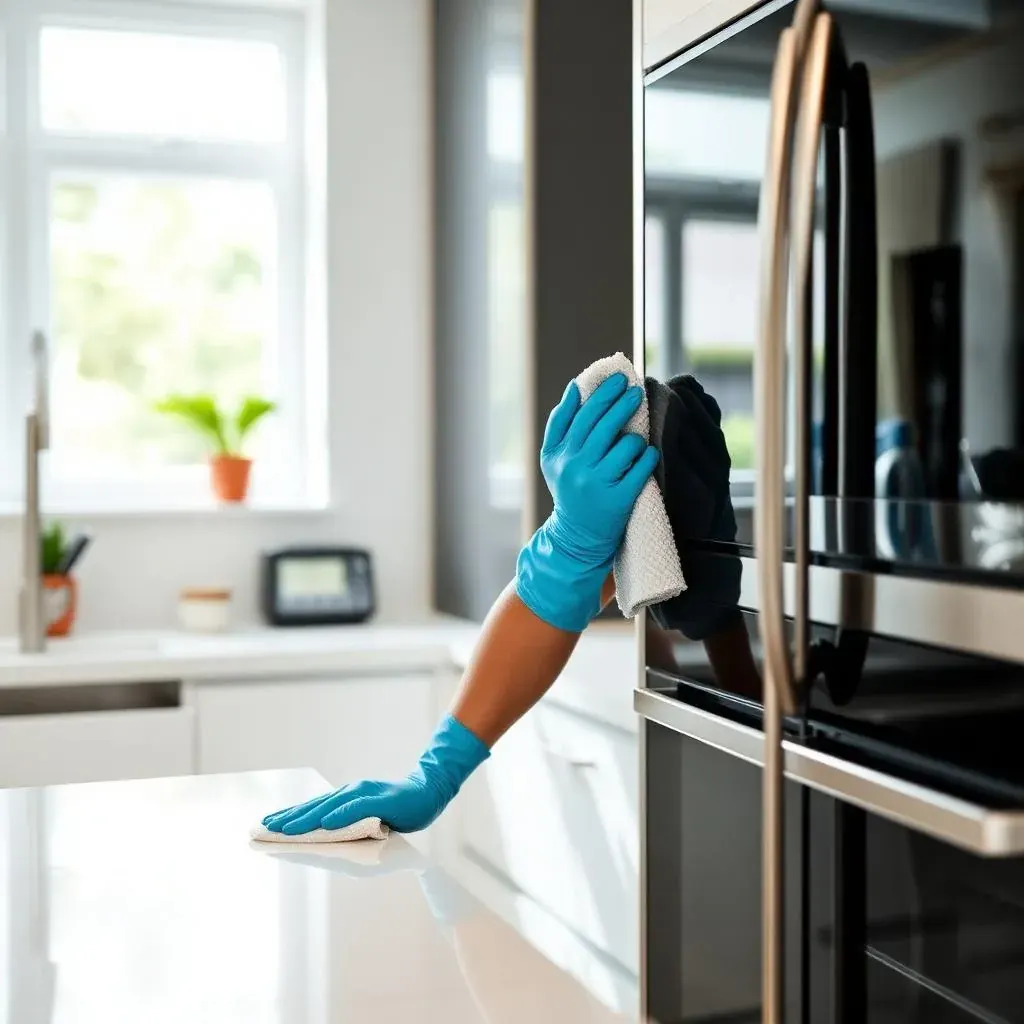
Clean kitchen counters and a stovetop

Kitchen

Check the care instructions for counters, cabinet fronts and appliance exteriors. Use only approved products, particularly on cooktops and oven linings. Follow the product's directions for any food-contact surface, including rinsing.

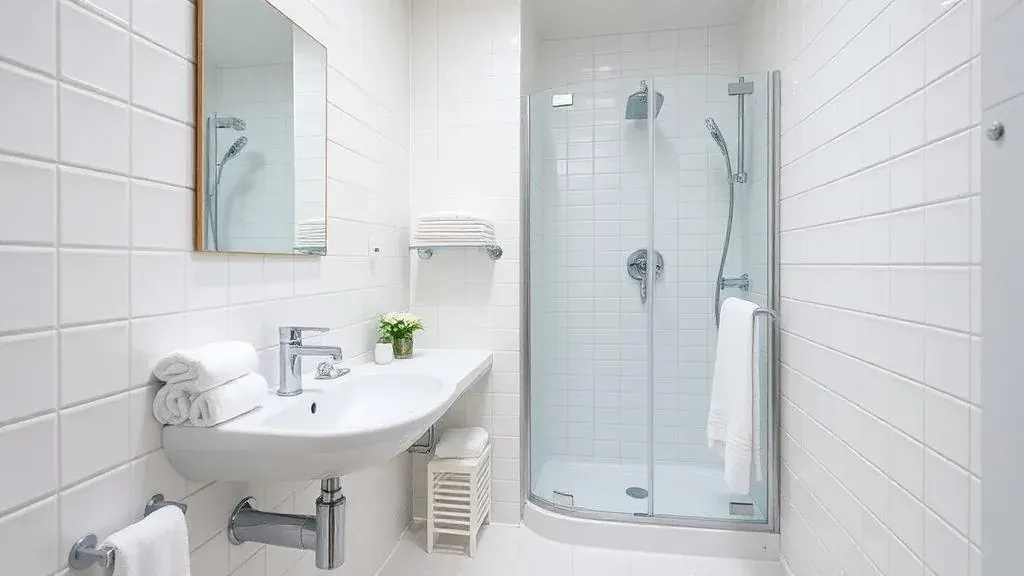
A clean bathroom sink, mirror and tiled walls

Bathroom

Match each cleaner to the fixture and finish. Do not assume an acidic cleaner belongs on every tap or tile, or that baking soda is suitable for grout. Follow the labelled contact time and never combine bathroom cleaning products.

Bedrooms, living areas and floors

Dust before you vacuum and work from higher surfaces to lower ones. Use a floor cleaner and moisture level approved by the flooring manufacturer; an all-purpose label is not permission to use a product on every finish.

Check before buying another bottle

These purchases may overlap with products you already have. Compare approved uses and keep any specialist product required by your surfaces' care instructions.

A separate cleaner for every room

Compare the approved surfaces before buying overlapping products. One cleaner may cover several jobs, but keep a specialist product if your surface manufacturer requires it.

Antibacterial everything

Disinfectant matters after raw meat, illness or diapers. For everyday dirt it adds cost and residue without cleaning better, and it only works if the surface stays visibly wet for the full contact time on the label, which is an easy step to skip.

Scented "cleaning" sprays that only deodorise

If it has no surfactant, it is air freshener with a mop on the label. A clean room does not need a scent to smell clean.

Bleach as a general-purpose cleaner

Bleach whitens and disinfects; it does not lift grease, and it damages plenty of surfaces. Keep it for the specific jobs that need it, and never combine it with acids or ammonia.

The whole list, in one place

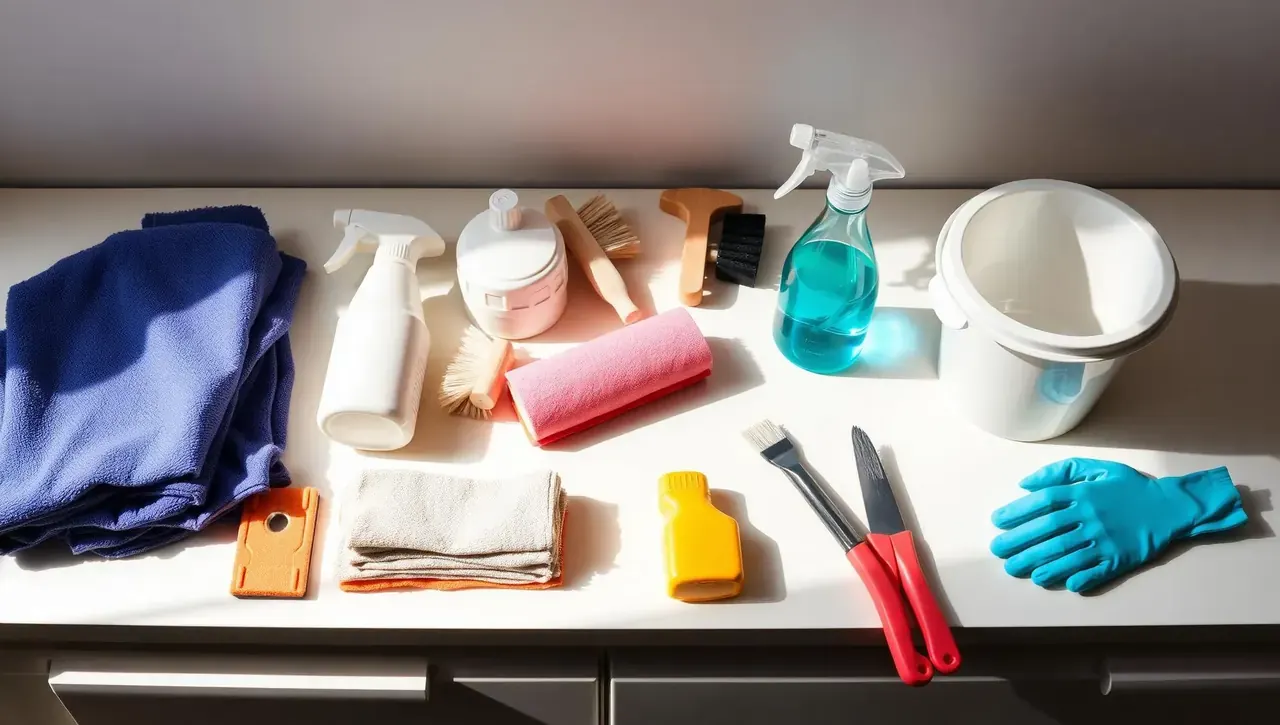
Cleaning supplies laid out flat: spray bottles, microfibre cloths and baking soda

Categories to check against your surfaces

  • • A compatible all-purpose cleaner
  • • A dozen or more microfibre cloths, in at least three colours
  • • Acidic bathroom / descaling cleaner
  • • Glass cleaner, plus one flat-weave cloth kept only for glass
  • • A box of baking soda

All five are sold at most Canadian grocery and hardware stores.

Common questions

What is the best all-purpose cleaner for a home?

Choose by the surfaces you own and their care instructions. A pH-neutral cleaner may be useful for routine work, but pH alone does not make it suitable for every finish. Check the approved uses, dilution, contact time and rinsing directions. This guide compares product categories, not brands tested head to head.

How many cleaning products does a home actually need?

There is no fixed number. This guide covers five useful categories to consider, not a required shopping list. Your surfaces may need fewer products or a manufacturer-specified cleaner, and an abrasive or acidic product may not be suitable at all.

Does natural mean a cleaning product is safer or more effective?

No. Vinegar and baking soda are chemicals too. Suitability depends on the product, surface and task, not a natural label. Neither should be assumed to disinfect. Follow the label and the surface manufacturer's instructions, and never mix household cleaning products.

What cleaning products do professional cleaners use?

A professional kit usually centres on a neutral all-purpose cleaner, a bathroom descaler, a glass cleaner, a degreaser and a stack of colour-coded microfibre cloths. The difference lies less in the products than in correct dilution, dwell time and keeping cloths from moving between rooms. Duty Cleaners teams bring all supplies and equipment to every clean, so the customer does not need to provide products.

Where can I buy these in Canada?

A pH-neutral all-purpose cleaner, microfibre cloths, an acidic bathroom cleaner, a glass cleaner and baking soda are all sold at most Canadian grocery and hardware stores. Buying the all-purpose cleaner as a concentrate and diluting it at home lowers the cost per use.

Keep reading

Cleaning with Vinegar and Baking Soda

What these two can and cannot clean — including the surfaces they will damage.

How Much Does a House Cleaning Cost?

What professional cleaning costs in Alberta, and what changes the number.

Or skip the shopping list entirely

Duty Cleaners teams bring all supplies and equipment, so you do not need to supply products. You do not need to clean first either: clear counters and floors get cleaned, and cluttered ones get worked around. Eco-friendly products are a paid add-on: ask for them when you book when you book. See the price for your home size before you book; the card is charged once the clean is complete.