Cleaning with Vinegar and Baking Soda
Two cheap household staples handle a lot of everyday cleaning, as long as you use them one at a time and keep them off the surfaces they damage.
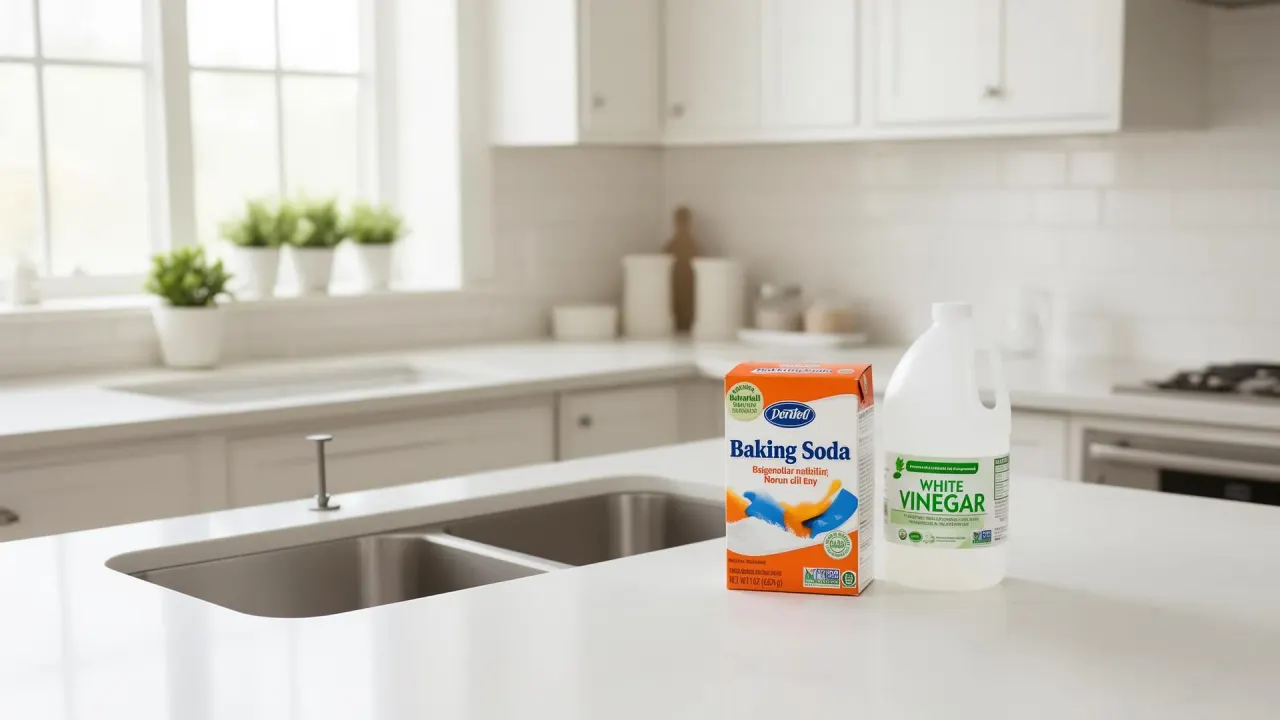
Vinegar and baking soda are inexpensive household ingredients, but natural does not mean harmless or suitable for every surface. Keep cleaning supplies away from children and pets, follow labels and provide the ventilation the instructions require.
Vinegar and baking soda cover a lot of that ground between them, and both are cheap enough to be worth trying. What follows is where each one works, where it does not, and what happens when you combine them, which is the part many guides get wrong.
Neither one cleans everything. Vinegar can damage natural stone, wood finishes, the backing of a mirror and the inside of a clothes iron, and neither replaces a purpose-made disinfectant.
Can You Clean with Vinegar and Baking Soda?
You'd be surprised at how many things in your home you can clean with baking soda and vinegar. Each one is a capable cleaner in its own right — and that is the important part. Baking soda is a mild alkali and a gentle abrasive; vinegar is a weak acid that dissolves mineral deposits and soap scum. They are at opposite ends of the pH scale, so combining them does not make a stronger cleaner. It makes a weaker one: the acid and the base cancel each other out, and what is left is mostly water.
That fizzing reaction is still useful, but for a mechanical reason rather than a chemical one — the carbon dioxide bubbles lift loose debris, which is why the combination works in a slow drain. For everything else, you will get better results using them separately, one after the other, than mixed together in a bowl.
🧂 Baking Soda (Base)
Baking soda (sodium bicarbonate) is a mild alkali that loosens grease and dirt, and a fine abrasive that scrubs without much force. Test it on a hidden patch of a glossy or soft finish first, because it can scratch.
🍶 Vinegar (Acid)
Vinegar is a weak acid, so it dissolves the mineral scale that hard Alberta water leaves on taps, shower glass and kettles. Use it on its own and rinse afterwards — it does that job better alone than neutralised by baking soda.
How to Mix Vinegar and Baking Soda to Clean
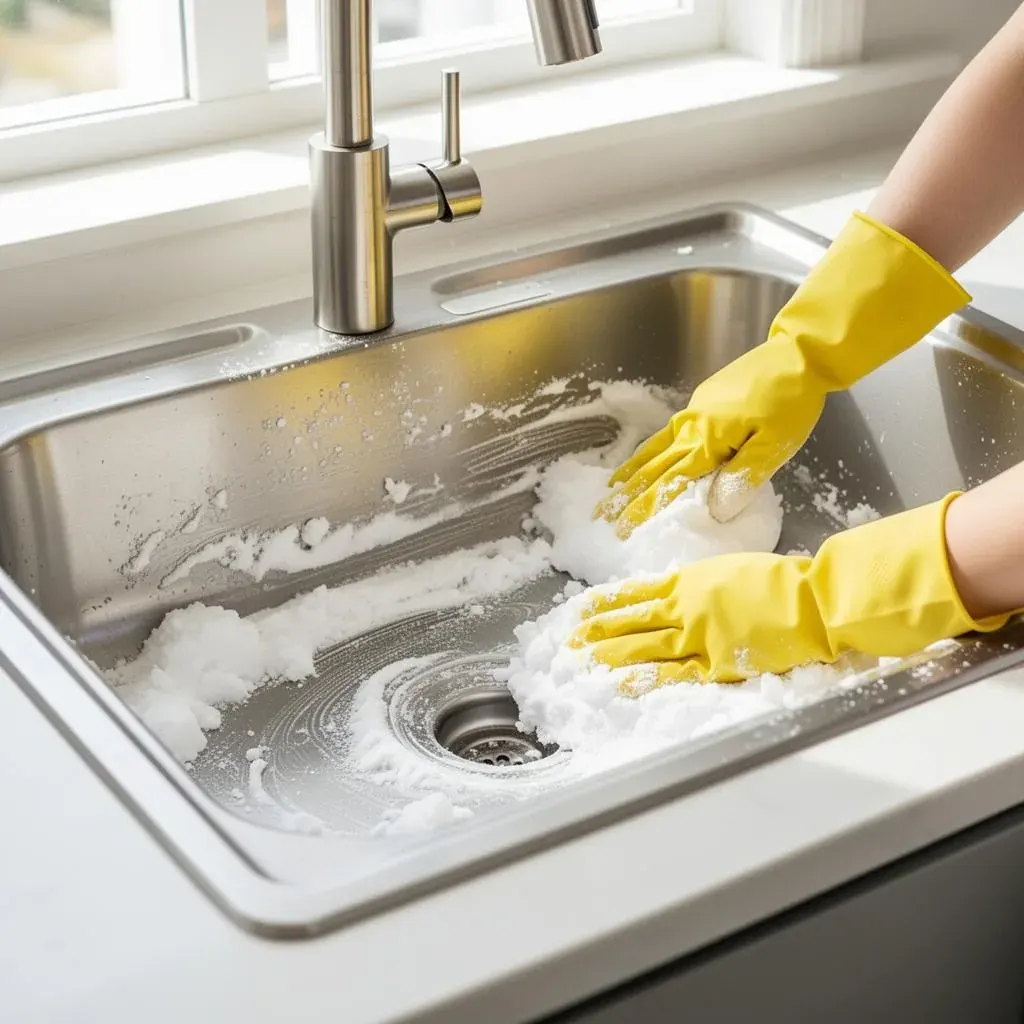
Choose a cleaning method approved for the surface. Do not improvise mixtures or store vinegar and baking soda together in a sealed container.
Fizzing is not proof of a better clean
Bubbles show that a reaction is occurring, not that a surface is disinfected or a drain is cleared. Use an appropriate product as directed instead of treating the reaction as a cleaning-performance test.
Never mix these, whatever you read online
- Vinegar and hydrogen peroxide. Combining them can form irritating peracetic acid. Do not mix them or improvise a sequence of different cleaners.
- Vinegar and bleach. This releases chlorine gas. This combination is genuinely dangerous, not merely ineffective.
- Bleach and ammonia (including many glass cleaners). Releases chloramine vapour.
Follow Health Canada's household chemical safety guidance and the product label. If you suspect harmful exposure, move away from the source and contact your poison centre or emergency services as appropriate; do not stay in the room to troubleshoot.
Where to Check Before Using Vinegar or Baking Soda
These are compatibility checks, not universal recipes. See the Moen finish-care guide for an example of finish-specific directions and Whirlpool's vinegar guidance for appliance limitations. Use the guide for your own make and model.
Kitchen Sink
Identify the sink material and coating first. Use the manufacturer's recommended cleaner and a compatible cloth. Vinegar and abrasive powders are not suitable for every sink, so do not apply a generic soaking recipe to an unknown finish.
Clogged Drains and Garbage Disposals
Do not rely on a fizzing mixture to clear a blockage, and never add it to a drain containing another cleaner. Follow the disposal's maintenance instructions. If a drain stays slow or blocked, stop adding products and seek appropriate plumbing help. Drain clearing is not a Duty Cleaners service.
Faucets
Follow the care guide for the exact faucet finish. Some manufacturers permit a diluted vinegar solution briefly on certain finishes and prohibit harsh or abrasive cleaners on others. Do not wrap an unknown finish in vinegar or scrub it with baking soda.
Refrigerator
Use your refrigerator's care instructions for liners, shelves and seals. Remove food before cleaning and follow the specified washing, rinsing and drying steps. Do not assume vinegar or an abrasive paste is approved for every internal surface.
Bathroom Surfaces
Check whether the tub, tile, grout and shower glass have coatings or special care requirements. Choose a compatible product and follow its label; an acid or abrasive can damage an unsuitable surface. Never mix bathroom cleaners.
Showerheads
Consult the showerhead manufacturer's descaling instructions. The finish and internal parts determine whether vinegar is permitted and, if so, the dilution and contact time. Do not substitute a general soaking time for those instructions.
Toilet Bowl
Use a toilet-cleaning product approved for your fixture and follow the label. Do not add vinegar, hydrogen peroxide or another product to a bowl that contains cleaner, including an in-tank cleaning product. This guide does not recommend homemade mixtures.
Carpet Stains
Follow the carpet manufacturer's stain guide for the fibre and stain involved. Test an approved product in a hidden area as directed. A generic vinegar recipe can affect dyes or backing, and cleaning does not guarantee removal of a stain.
Laundry and Washing Machines
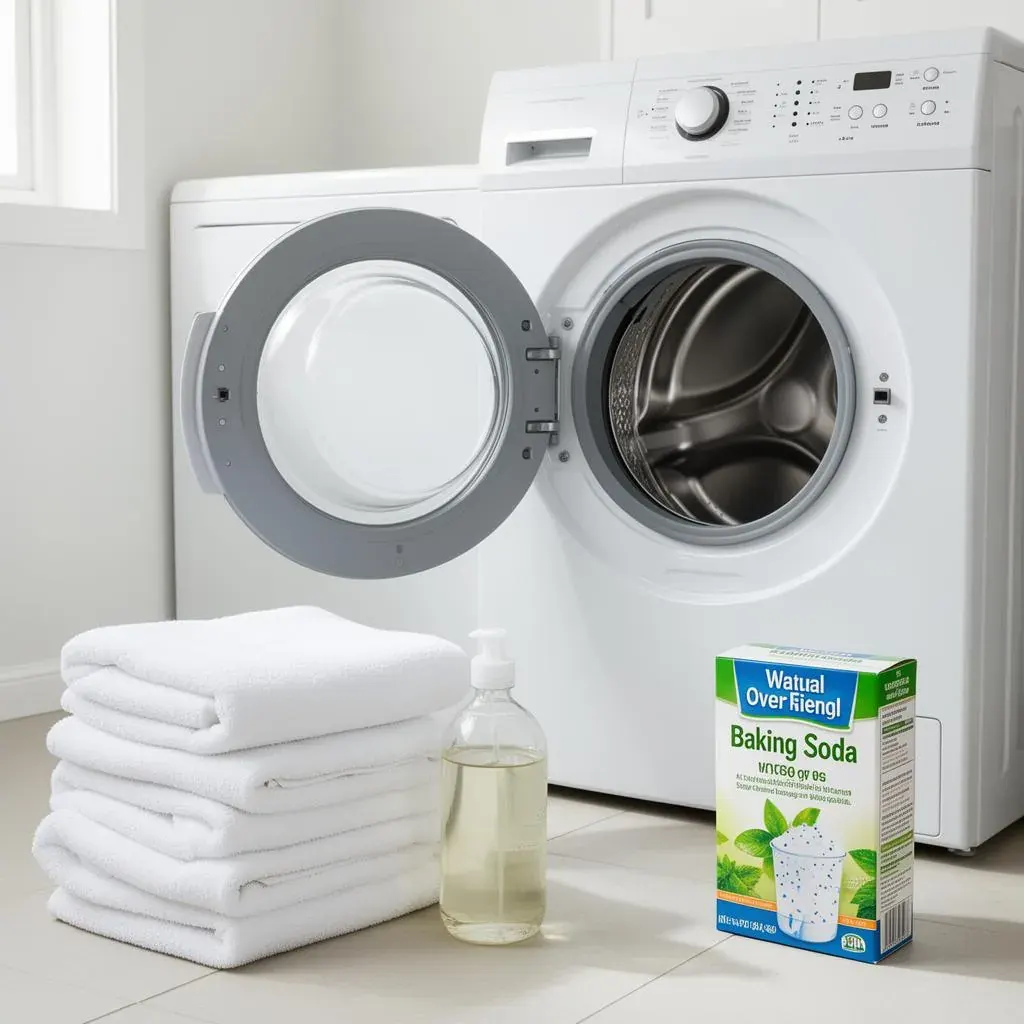
Use the detergent and maintenance products specified for your machine, and follow garment care labels. Do not routinely add vinegar as a softener or washer cleaner: some manufacturers warn that its acidity can damage seals and hoses. Never combine it with bleach.
When NOT to Clean with Vinegar and Baking Soda
Baking soda and vinegar cannot be used everywhere. Some surfaces are damaged by them, and for those a product made for the surface does a better job.
Clothes Iron
Do not add vinegar to the clothes iron because it can permanently damage the inside as the acid eats away the lining and metal parts.
Mirrors
Vinegar can creep under the edge of a mirror and attack the silvered backing, so keep it off them. Use a plain glass cleaner, or warm water and a drop of dish soap, then buff dry with a microfibre cloth.
Marble, Granite, or Stone Counters
Keep both off natural stone such as marble and granite. Vinegar can etch the surface and baking soda can scratch it, and either one can dull the shine. Use a cleaner made for stone, diluted in water, instead.
Wood Floors and Furniture
Vinegar can damage the finish that protects the wood and leaves it cloudy and dull. Use cleaning products made for wood floors and furniture instead.
When the Grime Has Built Up
When built-up grime is past what vinegar and baking soda can shift, a deep clean is the standard checklist plus the deep-clean package for baseboards, doors, light switches, wall outlets and vent covers. Duty Cleaners books deep cleaning in Edmonton and deep cleaning in Calgary. The team brings all supplies and equipment, and eco-friendly products are a paid add-on: ask for them when you book.