House Cleaning Tips for a Spotless Home
A clean home comes from a handful of small habits done most days, and a schedule that keeps the bigger jobs from piling up.

Most people picture "keeping a clean home" as a big Saturday-morning production — every room at once, a few hours lost to it. In practice, the homes that stay clean aren't cleaned harder. They're cleaned in smaller, more frequent passes, so nothing ever gets the chance to pile up into a project.
Here's the approach that holds up: declutter first, build a simple schedule, keep a short list of daily habits, and know which rooms need more frequent attention than others.
Start by decluttering, not scrubbing
Cleaning around clutter means cleaning the same surface twice — once now, and again once the clutter finally moves. Before you pick up a cloth, sort one room at a time into keep, donate, and discard. Fewer things on a surface means less to clean around, and a visibly tidier room even before any actual cleaning starts.
This is also the step that makes everything after it faster. A clear kitchen counter is a quick wipe; a cluttered one means moving everything off it first.
Five daily habits that prevent most of the work
None of these take more than a couple of minutes, and together they are the reason some homes never seem to need a big clean.
Make the bed
It takes thirty seconds, and it changes how the whole room looks for the rest of the day.
Wipe counters and the sink
Wipe the kitchen counters and the bathroom sink right after you use them. That stops grime from building up far better than a weekly scrub does.
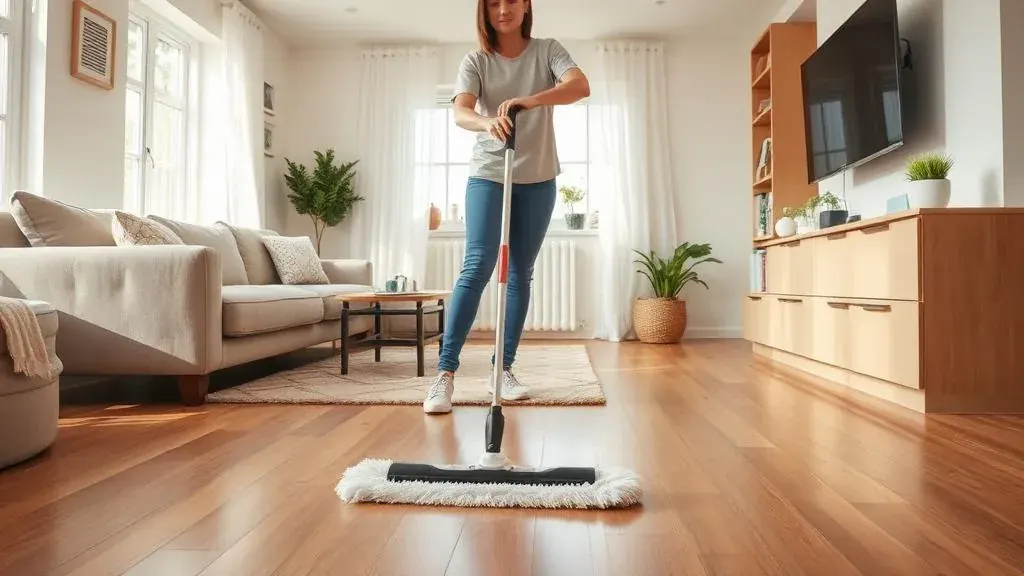
Run a quick sweep or vacuum
Do just the high-traffic strip: the entryway, the kitchen floor and the patch in front of the couch. It takes a couple of minutes.
Put things back where they live
Spend five minutes resetting the house before bed. If an item has no "home", that is a sign it needs one, or needs to go.
Deal with spills immediately
A spill is easiest to clean while it is still wet and hardest once it dries. This one habit prevents more staining than any product.
Match the small job to what keeps coming back
Start with the problem that returns between cleans, rather than repeating the whole checklist:
- • Tracked-in dirt: keep shoes near the entrance and clean the affected floor using its care instructions.
- • Cluttered surfaces: put items away so the counter or table can be wiped without moving the same pile repeatedly.
- • Recurring splashes: address them promptly with a surface-compatible method instead of letting residue accumulate.
For a full daily, weekly and monthly task plan, use our DIY cleaning schedule rather than turning every small touch-up into a full clean.
Which rooms need more frequent attention

Kitchen
Appliance exteriors, countertops and the floor pick up grease fastest, so they need the most frequent attention.
Wipe the stovetop and counters after cooking, before the grease has a day to set. Cabinet fronts and the inside of the microwave are easy to forget.
Bathroom
Hard Alberta water leaves mineral scale on taps and shower glass, and daily use adds soap scum, so this room needs more than a quick wipe.
Tile, sink and toilet need a proper clean at least once a week. A quick wipe of the shower glass and taps after each use is far easier than removing built-up scale later.
Bedrooms
Dust settles on flat surfaces and in bedding, so bedrooms need regular dusting as well as vacuuming.
Dust surfaces before you vacuum, so the dust you knock down lands on a floor you have not cleaned yet. Wash bed linens weekly.
Living areas
High-touch points such as light switches, remotes and door handles are easy to miss in a normal cleaning routine.
Dust and vacuum on a regular schedule, and wipe the high-touch surfaces even when they do not look dirty.
A quick note on tough stains
Speed matters more than product for most stains. Blot coffee and wine spills straight away, rather than rubbing them, to lift the excess liquid before it sets. For grease, baking soda left to sit for a few minutes before wiping or vacuuming does most of the work. Test any cleaning solution on a hidden patch first if the surface is delicate; the full method is in Cleaning with Vinegar and Baking Soda.
Common questions
What is the single most effective habit for keeping a home clean?
Cleaning up spills and messes the moment they happen saves the most work. It takes seconds at the time and prevents the staining and build-up that turn a quick wipe into a scrubbing job later.
Should I declutter before or after cleaning?
Declutter before you clean. Cleaning around clutter means re-cleaning the same surfaces once the clutter finally gets moved. Sort one room at a time into keep, donate and discard before you pick up a cloth.
How often should each room get cleaned?
Kitchens and bathrooms need attention at least once a week, because grease builds up in a kitchen and hard water leaves scale in a bathroom. Bedrooms and living areas can usually stretch to every one to two weeks, as long as the daily habits of making the bed, wiping surfaces and sweeping the floor are already in place.
What is the fastest way to build a cleaning schedule that sticks?
Split household tasks into three tiers: daily habits of a couple of minutes, weekly jobs of thirty to sixty minutes, and monthly jobs such as baseboards, behind appliances and window tracks. A schedule that tries to fit the monthly jobs into every week is the one that gets abandoned.
Are natural ingredients like vinegar and baking soda enough on their own?
Vinegar and baking soda handle a lot of everyday cleaning. Vinegar dissolves the mineral scale that hard Alberta water leaves on taps and shower glass, and baking soda is a mild abrasive for sinks and tubs. Neither replaces a purpose-made product for heavy grease or disinfecting, and vinegar should stay off natural stone, wood finishes and mirrors.
Keep reading
The Top 5 Must-Have Cleaning Products
The five cleaning products worth keeping, and what you can stop buying.
A Cleaning Schedule That Actually Holds Up
A more detailed breakdown of the daily, weekly and monthly schedule.
Or hand off the weekly jobs
If you want help with the routine cleaning alongside these small touch-ups, Duty Cleaners offers the standard checklist as recurring cleaning, booked weekly, bi-weekly or every 4 weeks, with a discount from the second visit. Nothing is charged at booking, and the card is charged once the clean is complete.